Jun 12, 2024 · 3 min read
Some thoughts on Apple's AI strategy
Some thoughts on Apple’s AI strategy — and learnings for product oriented companies#
By Kartik Dhar · June 12, 2024
In typical Apple fashion, they entered the AI game late, and announced it with a ton of typical marketing fluff (Apple Intelligence?). At the outset what seems like a fairly straightforward ‘partnership’ with OpenAI is probably much more complex.
Here are my top 5 takeaways from the event, coupled with my learnings from the recent Generative AI Summit in San Francisco — and how we as product leaders can learn from what Apple has done here.
1. Privacy and Security first#
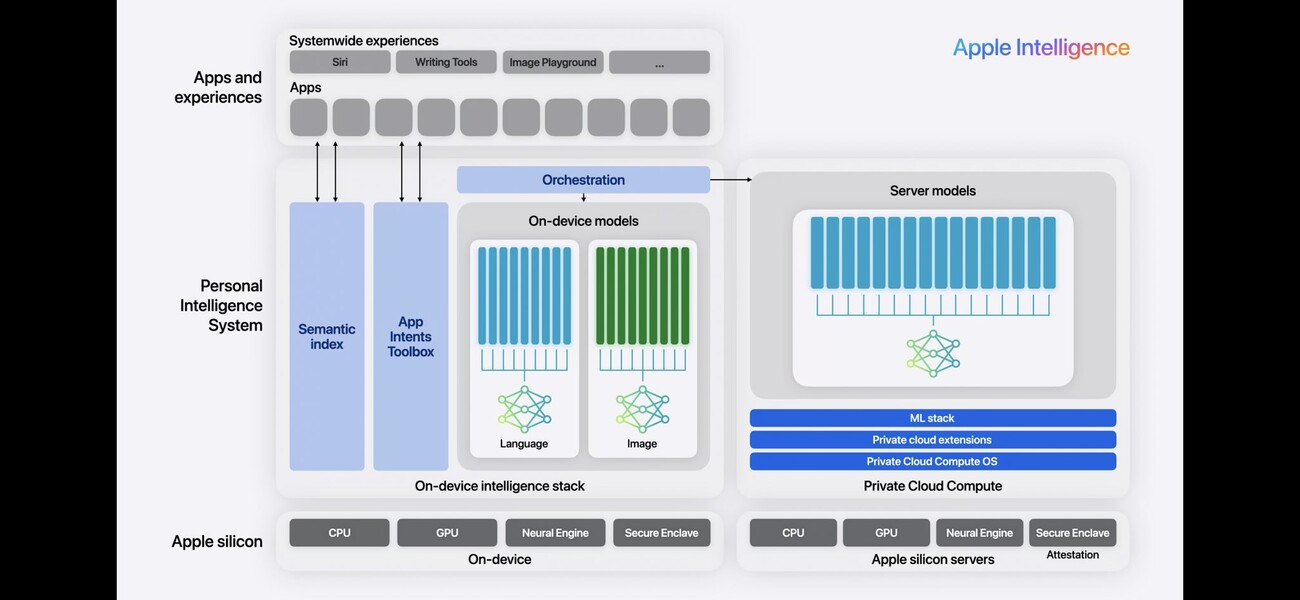
At the outset it seems like by partnering with OpenAI / ChatGPT, Apple have compromised on their security stance. However it’s much clearer after observing the Platforms State of the Union talk that there’s much more to it. For the vast majority of practical AI use cases, their fine tuned SLM (Small Language Model) approach combined with app intents should be able to handle them.
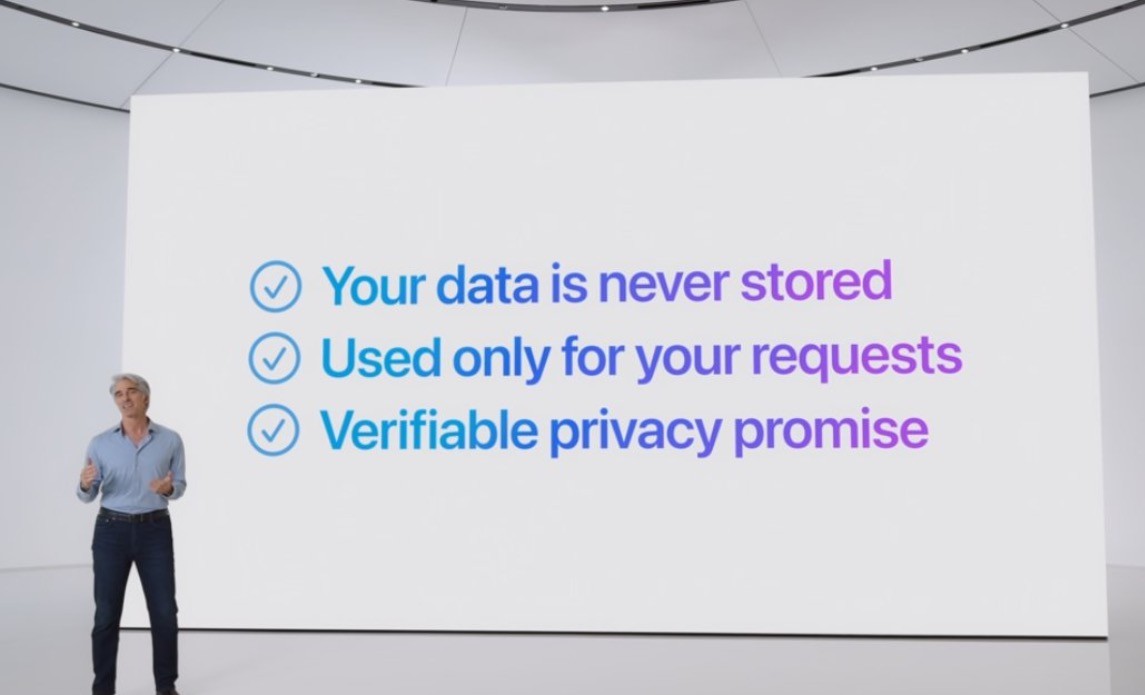
The hybrid architecture of on-device and cloud-based models built with the Private Compute Cloud (without persistent storage and with secure enclave + secure boot built in) ensure that they are able to control the flow of sensitive data very carefully.
Only for the long tail of queries will ChatGPT be used, and that too the user will get a notification every time they want to access it.
2. AI not as an app but a platform-level capability#
Rather than a separate “Apple Intelligence App”, their strategy of building in system level capabilities that can be exposed through APIs for Apple’s own apps as well as 3rd party apps — they can make the experience much richer and consistent than apps like ChatGPT that are standalone and lack access to specific app context. Combined with app intents, the use cases here could be limitless.
3. Playing to their hardware strengths and reducing reliance on NVIDIA#
A somewhat under-appreciated but a significant strategic move was the building out of Apple’s AI cloud servers using their own M series chips — whether they can match the performance of NVIDIA / CUDA architecture is yet to be seen, however this might be more impactful than it seems right now, given the scale that Apple operates at.
4. The models seem to matter less now#
Now with Gemini 1.5, GPT-4o and Llama-3 pretty much converging at the SOTA level, and smaller language models evolving — the distinguishing factor between AI applications looks like it is going to be more and more around the ability to handle context-specific use cases — whether through a fully generative SLM approach or through a RAG (Retrieval Augmented Generation) architecture.
By decoupling from ChatGPT, Apple have also maintained the flexibility of using other LLMs (Gemini?) for the long tail queries in the future. Smart move.
Some learnings for product-driven organizations#
- Investing in context specific SLMs (Small Language Models) and fine tuning for context-specific use cases instead of peak LLM SOTA models may provide more value to users
- Consider hybrid architectures — not every query or request needs to have a SOTA LLM powering it (saves cost)
- Decouple your apps from LLM providers — this is an easy one. The LLM ecosystem is evolving rapidly. Having architectural flexibility to plug in to the right model through adapters is key towards future-proofing your product
- Explore applying RAG (Retrieval Augmented Generation) architecture — RAG is a powerful approach that can enable content discovery and more relevant results than purely generative models, also reducing hallucination risk